
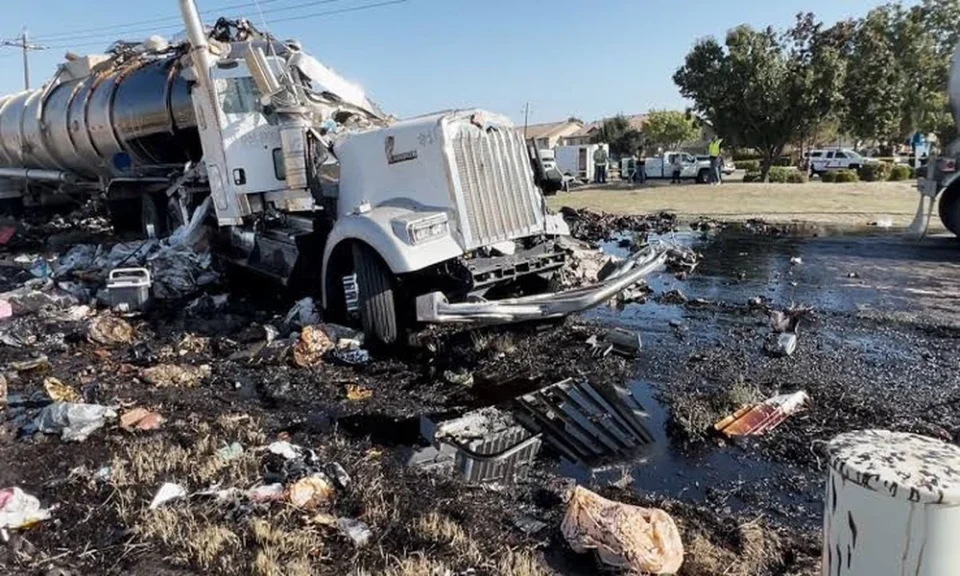
The collision takes less than two seconds. The aftermath can last years. Most people who survive a semi-truck crash spend the first day overwhelmed, in pain, and being pulled in four directions at once by paramedics, police officers, insurance adjusters, and their own fear. That’s exactly the window where mistakes happen and where the difference between a strong claim and a weak one quietly gets decided.
This guide breaks down what those first 48 hours actually look like, what you should be doing, what you should never say, and why the clock starts ticking before the wreckage is even cleared from the road.
Why Semi-Truck Crashes Are a Different Animal
A fender-bender between two passenger cars is complicated enough. A collision with a fully loaded 18-wheeler is a different category of event entirely. The weight alone changes everything: a typical semi can weigh up to 80,000 pounds loaded, compared to roughly 4,000 pounds for a passenger sedan. Physics does not negotiate.
A total of 5,340 people died in large-truck crashes in 2024, according to the National Safety Council. That number decreased 2.5% from 2023 but remains up 30% over the last 10 years. The majority of those deaths are occupants of other vehicles, at 70%, not the truck drivers themselves.
So when you’re sitting on the side of the road after getting hit by a semi, you’re dealing with a crash type that statistically carries severe consequences for people in your seat. Treating it like a normal fender-bender is the first mistake victims make.
Hours 0 to 6: The Scene and the Evidence You Cannot Get Back
The first six hours are irreplaceable. Physical evidence exists in the world for a very short time after a commercial truck crash. Skid marks fade. Debris gets swept. The truck itself, if not impounded, may be driven away and cleaned before anyone documents its condition.
Here’s what your 0-to-6 window should look like if you’re physically able:
- Move to safety, then stop moving. Get out of live traffic lanes, but stay at the scene. Leaving creates legal problems you don’t need.
- Call 911 immediately. You need law enforcement there, not just for your protection but for the official accident report, which becomes a foundational document in any later claim.
- Photograph everything before it’s moved. Your phone is the most important tool you have in this moment. Shoot the truck’s license plate, DOT number on the door, the cargo, your vehicle’s damage, road conditions, skid marks, traffic signs, and the surrounding area.
- Collect driver and carrier information. You need the truck driver’s name, commercial driver’s license number, employer and carrier name, and insurance policy information. The carrier’s name matters because trucking companies often carry separate liability coverage from the driver.
- Get witness contact information. Names and phone numbers only. Don’t ask anyone to describe what they saw right now; just get the information for later.
- Limit what you say. Do not apologize. Do not speculate about fault. Do not describe your injuries in detail to anyone except emergency medical personnel.
One detail most people miss: the truck’s Electronic Logging Device (ELD) data. Federal law requires commercial trucks to record hours-of-service electronically. That data can prove whether the driver was over his legal limit when the crash happened. But it can also be overwritten or lost quickly. Preserving a legal hold on that evidence is one of the first things an experienced attorney will act on.
The Fatigue Factor: Why Those ELD Records Matter So Much
Fatigue is not a minor factor in commercial trucking crashes. It’s a structural problem built into how the industry operates.
Studies sponsored by the Federal Motor Carrier Safety Administration reveal that 65% of truck drivers report they often or sometimes feel drowsy while driving, and nearly half of truck drivers admit they had actually fallen asleep while driving in the previous year.
The federal response has been to cap driving hours. FMCSA rules limit the average work week for truck drivers to 70 hours to ensure that all operators have adequate rest, and more than 85% of the truck-driving workforce see no changes from these caps, meaning only the most extreme schedules are affected. Drivers who push past those limits represent a clear violation of federal safety rules, and that violation can become powerful evidence of negligence.
“Working long daily and weekly hours on a continuing basis is associated with chronic fatigue, a high risk of crashes, and a number of serious chronic health conditions in drivers,” according to a formal rule notice published by the U.S. Department of Transportation, which estimated the hours-of-service regulations would save 19 lives and prevent approximately 1,400 crashes annually.
When you photograph the truck’s cab after a crash, look for any visible logbooks, paperwork, or paper records stuffed behind the seat. Old-school paper logs still exist, and they sometimes contradict the electronic records.
Hours 6 to 48: Medical Care, Insurance Adjusters, and the Pressure Campaign
Here’s where a lot of victims lose ground they can never recover.
The trucking company’s insurance adjuster will often make contact within the first day. They’re not calling to help you. They’re calling to get a recorded statement while you’re still disoriented, possibly medicated, and before you fully understand your injuries. Anything you say in that call can be used to cap your payout.
The only correct response to an adjuster’s call in the first 48 hours is: “I’m represented by counsel and I’ll have my attorney contact you.” Even if you haven’t hired anyone yet, that statement stops the pressure campaign.
On the medical side, get evaluated even if you feel fine. Adrenaline is a powerful masking agent. Internal injuries, concussions, and soft-tissue damage frequently do not produce obvious symptoms at the scene. A gap between the crash and your first medical visit gives insurance companies grounds to argue that your injuries weren’t caused by the collision.
Keep every piece of paper from every medical interaction: discharge instructions, prescription receipts, referral letters, and billing statements. These documents build the financial picture of your damages.
The 48-Hour Evidence Preservation Checklist
| Item to Preserve | Why It Matters | Time Window |
|---|---|---|
| Scene photos and video | Documents road conditions, vehicle positions, and damage before cleanup | Immediately |
| Official police report | Establishes the legal record of the event | Same day |
| Witness contact info | Eyewitness accounts can corroborate your version of events | Same day |
| Truck driver and carrier details | Identifies all liable parties, including the carrier’s insurer | Same day |
| ELD data (via legal hold request) | Proves fatigue or hours-of-service violations | Within 24 hours |
| Medical evaluation records | Ties your injuries directly to the collision | Within 24 hours |
| Dashcam or surveillance footage | Objective visual record; businesses near crash sites often overwrite footage quickly | Within 48 hours |
Why Iowa Crashes Carry Specific Complications
Iowa sits at the intersection of major interstate freight corridors. I-80 and I-380 carry enormous volumes of commercial traffic daily through the Cedar Rapids area, which means local drivers share the road with long-haul operators running difficult schedules. The state’s rural road network compounds the problem: more than half of fatal large-truck crashes nationally occurred on rural roads , where response times are slower and evidence can degrade faster before investigators arrive.
Truck accident cases in this region involve both state tort law and federal regulations, because commercial carriers operating in interstate commerce fall under FMCSA rules regardless of where a crash happens. That dual-layer structure makes these cases genuinely complex. Cedar Rapids Iowa Truck Accident Attorneys who handle these claims regularly know how to subpoena ELD records, challenge carrier maintenance logs, and identify when a trucking company’s dispatch pressure contributed to a fatigued driver’s decision-making.
The Truck Safety Coalition, a nonprofit that tracks commercial vehicle safety advocacy, notes on its site at trucksafety.org that truck driver fatigue has been recognized as a major safety concern and a contributing factor in fatal truck crashes for over 70 years, yet systemic pressure on drivers to meet delivery schedules continues to make it a recurring cause.
One Decision That Changes Everything
The single biggest variable in how a semi-truck crash claim resolves is how quickly the victim gets legal representation. Trucking companies mobilize fast. Their insurers have specialists, accident reconstructionists, and legal teams who deal exclusively with commercial crash claims. Waiting two weeks to consult an attorney is not neutral; it’s a concrete disadvantage.
You don’t have to have every answer figured out before you make that call. What matters is that someone with the right experience starts pulling on the same threads the other side is already pulling from the opposite direction. The 48-hour clock doesn’t stop for anyone, and neither should you.
