
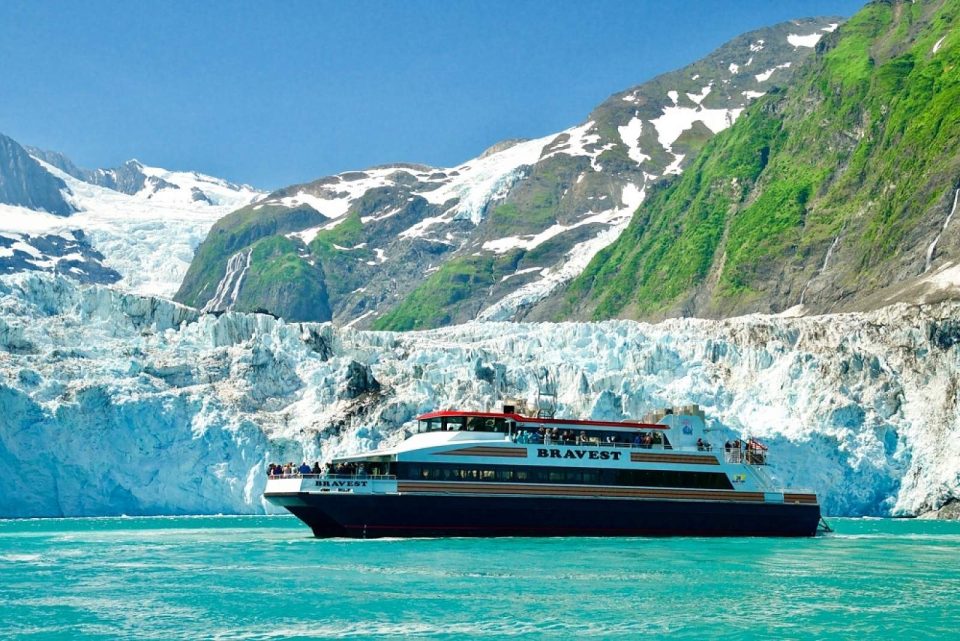
My first glacier cruise started with a Dramamine and a small crisis of faith. I had spent a decade hearing that Alaska waters turn stomachs inside out, and I packed for the worst. Two hours in, the water sat flat as a parking lot and I was eating a warm meal at a reserved window seat while a waterfall slid past the glass. That gap between what people fear and what actually happens is the whole story of a catamaran day in Prince William Sound.
Here is the honest version, so you can pack right and plan your day.
The short answer: calmer than you think
Catamarans run on two hulls, and that design spreads the ride across a wider footprint. Less rocking, less chop, and a much steadier deck under your feet. Pair that with Prince William Sound, which sits behind islands and peninsulas that block a lot of open ocean swell, and you get some of the most forgiving water in the state. Whittier builds its whole summer around that reputation. Locals treat the sound as their calm-day playground, which is why so many operators sail from there instead of more exposed ports. If motion is your worry, this is the route that answers it, and you can read the operator’s own notes on what to expect on a Alaska catamaran before you commit.
I would pick a catamaran over a single-hull boat for this trip every single time. Not because monohulls are bad, but because on a day when you want to stand up, walk the rail, and shoot photos, stability matters more than anything else.
What happens between boarding and the first glacier
The day has a rhythm, and it helps to know it before you show up.
Boarding in Whittier
Whittier is a small port town reached through a one-lane shared tunnel that alternates direction on a schedule. Miss your window and you wait. Give yourself a real buffer, especially if you are driving down from Anchorage the same morning. If the tunnel timing worries you, riding the Alaska Railroad removes the whole problem.
The first hour
The boat pulls out, the crew runs a safety briefing, and then the meal service starts. That timing is deliberate. People settle in, eat something warm, and by the time they look up, the town is a speck.
Mid-cruise
This is the stretch most people remember. The captain reads conditions on the fly. Ice, weather, and wildlife all shift the route, and a good crew changes plans without drama. You might spend twenty minutes idling near a haul-out of sea lions, or push toward a face that has been calving all morning.
The glacier itself
Nothing in the photos prepares you for the sound. A chunk of ice the size of a garage breaks off and hits the water, and the crack reaches you a beat later, like thunder from a clear sky.
Common questions people ask before booking
I field the same handful of questions from friends every summer.
Will I actually see a glacier? Yes. These are glacier cruises, not wildlife lotteries. You sail to see ice, and you will.
What about the food? On the cruises that include it, a hot meal comes with your ticket at no extra charge. It arrives at your reserved seat within the first hour or so.
Can I go if I use a wheelchair? Accessibility varies by operator, so ask directly. The better outfits have accessible restrooms and reserved indoor seating, but confirm before you book rather than after.
Is it worth it if I only have one free day in Alaska? For most people, yes. It packs glaciers, wildlife, and scenery into a single window, which is hard to beat when your itinerary is tight.
Wildlife, water, and the weather you should pack for
You are moving through a national forest the size of a small state, so treat the wildlife as a bonus rather than a schedule. Sea otters float on their backs and crack shells on their chests, which never stops being funny to watch. Humpbacks show up in summer. Orcas pass through. Puffins sit on the water looking like something assembled from spare parts.
Around the sound, expect rain at some point, clouds that lift and drop without warning, and temperatures that feel ten degrees colder on the water than in town. Layers, a real rain shell, and a hat you can pull down over your ears. Sunglasses matter more than you would guess. Sun off a glacier field is brutal on the eyes.
If a day looks rough in the forecast, don’t panic. According to the National Weather Service, coastal Alaska conditions shift quickly, and a gray morning in Whittier often turns into a clear afternoon out among the ice. Bring the layers and let the day do what it does.
A five point checklist before you go
- Book early for July and August. Those weeks fill first, and the good seats go with them.
- Plan your tunnel window with an hour of slack, or skip the drive entirely.
- Pack layers, a waterproof shell, sunglasses, and a camera you can hold steady.
- Take motion sickness medicine an hour before boarding if you know you are sensitive, even on calm water.
- Charge everything the night before. Cold air drains batteries faster than you expect.
One more thing nobody mentions. Bring a pair of binoculars. Your phone zoom will let you down when a humpback surfaces a hundred yards off the bow.
One thing I got wrong
I spent months treating this trip like an endurance test. I planned medication, backup medication, wristbands, and a seat near the exit. All of it was wasted effort. Public lands in the area cover millions of acres of protected coastline and fjords, and the boats that run here are built for exactly this water, as the National Park Service documents across the region. The real variable is not the sea. It is your schedule. A rushed tunnel crossing or a late arrival will wreck your morning faster than any wave ever could.
So build in slack, dress for rain, and stop bracing for a rough ride. The water out there is calmer than the drive to get to it.
And if you want the local read on when to sail and what a good day looks like, the Alaska travel resource keeps a solid overview of the region’s seasons and routes.
