
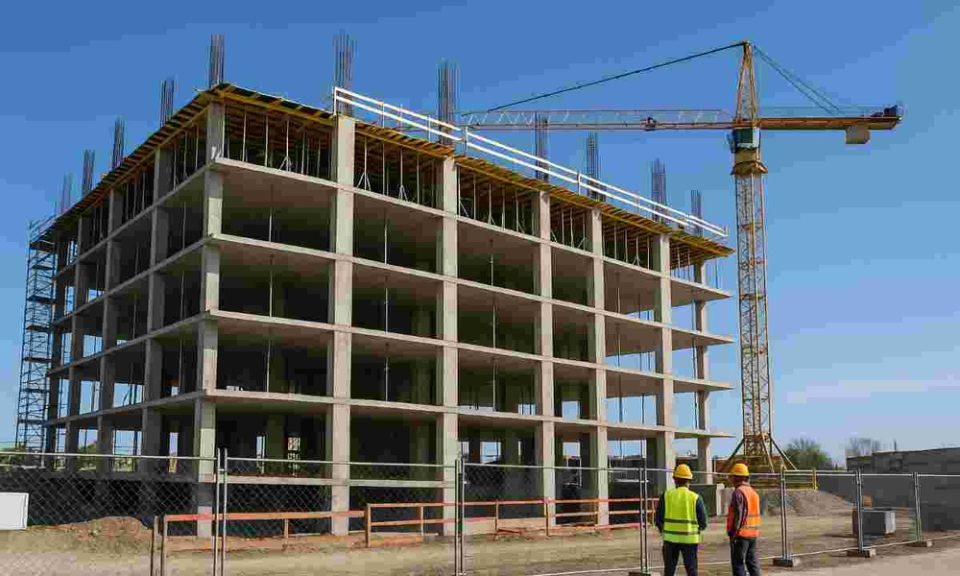
Construction work moves fast. Materials get ordered, subcontractors get scheduled, and the pressure to deliver on time rarely leaves room for any administrative bypass. Insurance tends to get treated the same way. This approach is tricky, and it works until it does not. The resulting financial damages in the contracting business, in case the trick fails to work, are rarely small. Taking the time to learn more about what contractor insurance actually covers is one of the more practical things a contractor can do before a problem forces the conversation.
The Risks that Show Up Without Warning
A delivery driver ends up hitting a parked company truck outside a job site. A subcontractor’s error damages a client’s property. An employee slips on a wet surface and misses three weeks of work. None of these is unusual. They happen across construction job sites regularly, and what separates a recoverable incident from a damaging one is almost always whether the right coverage was in place.
The third-party side is covered by general liability insurance. This includes personal injury and property damage from operations. It is the coverage that most clients need before the work starts, and for good reason. While general liability may cover personal property, it would not extend to a contractor’s own equipment, vehicles used in business, or employee injuries. Those need to be addressed with different policies, or else they are borne by the operator.
Under several jurisdictions, including the Texas law, workers’ compensation coverage is required for most employers and in the construction industry. When an injury happens on-site, medical expenses and lost wages will result in a cost that a company without insurance coverage cannot practically absorb.
Then comes the builder’s risk insurance, which addresses a gap that standard policies leave open. Materials on site, equipment staged for installation, and the partially built structure itself all carry exposure that only a builder’s risk policy is designed to cover. Contractor insurance is not limited to those discussed above but expands to include coverages for all general contractors, subcontractors, remodelers, construction workers, carpenters, HVAC, plumbers, and more.
How to Choose the Right Coverage?
The right policy for a roofing contractor looks different from the right policy for an electrician or a concrete subcontractor. Crew size, equipment value, project types, and contractual requirements all shape what coverage is actually necessary. Choosing a policy, in such cases, where it just bundles everything without taking into account the differences, will either leave gaps or charge a premium for coverage that serves no purpose to the policyholder.
Independent agencies do not just sell from a single product catalogue; they also evaluate options from different carriers. When coverage is required to be put together around a particular business and not merely based on a template, that distinction becomes highly important. Contractors who want to learn more about what contractor insurance can put together for their operation will find that the process starts with the business, not the brochure.
